
Athens, GA · Garage Door Service
What Older Insulation Rules Mean for Athens Garage Doors
Homes in the Athens area built 1976-2012 often have garage doors from before current insulation rules - here's what that costs you and when it matters most.
- Repairs & new doors
- Springs & openers
- Serving 7 nearby communities
The Problem
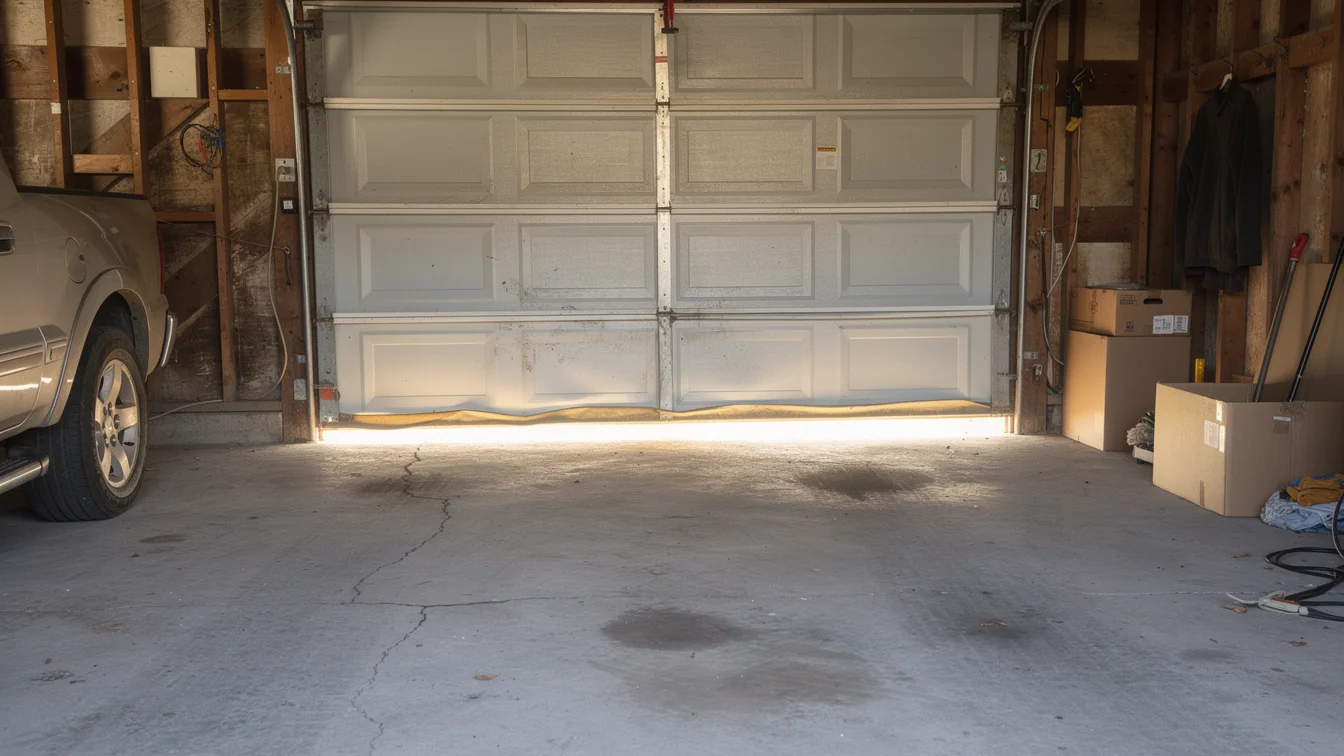
Most of the garage doors we work on sit on houses built between 1976 and 2012, with the heaviest concentration going up through the 1980s and 90s across the 19 named communities we cover. That window matters because it straddles a hard line in the building code. Doors put in before the newer insulation requirements took hold are usually single-layer steel skins or hollow wood panels, with a thin bead of weatherstripping at the bottom and nothing resembling a thermal break where the panel meets the frame. If your door is original to the house, or close to it, you're looking at a product built before anyone required a foam core or a sealed bottom edge. That's not a defect - it's just what the code allowed at the time. The practical effect shows up as a cold slab of metal radiating straight into the garage, a gap under the door you can see daylight through, and panels that rattle in their tracks because the original hardware was never sized for a heavier insulated door. None of that means the door is broken. It means it was built to a different standard than what goes in today.
What You Pay
We don't post a flat number for a repair or a replacement because the range is wide and depends on what's actually on the house - door size, whether it's insulated or not, and what shape the opener and track are in. What we can say is that the Athens service area has a median household income of $78,317 across roughly 24,610 households, with about 14,673 of those owner-occupied houses. That's the group we quote jobs for, and it's part of why we price repairs separately from full door replacement rather than bundling everything into one number: a torsion spring swap on an older non-insulated door costs a lot less than pulling the whole panel and hardware and putting in a current insulated unit. If a shop quotes you a single flat figure before looking at your door, be skeptical. The honest limitation here is that we can't tell you a price without seeing the door - the variation between a 1980s single-layer steel door and a 2010s insulated one is too wide to average into something useful.
What Local Conditions Do
Athens sits in a cold-moderate climate band, which means the swing between a cold winter morning and a warm afternoon is routine, not rare. On an older, non-insulated door from the pre-code era, that swing does real work on the metal and the hardware. Steel panels contract in the cold, which opens up the gap at the weatherstripping that was already thin to begin with, and the same panels expand again as the day warms, which is part of why original doors from the 1980s and 90s stock common across this area develop a wobble in the track over the years. Torsion springs also feel the cold - the metal stiffens, and a spring that was already near the end of its cycle count is more likely to let go on a cold morning than a mild one. None of this is unique to any one street; it's just what happens to door hardware built before insulation rules tightened, sitting through decades of seasonal swing. A newer insulated door with a foam core handles the same swing with far less movement in the panel.
When Waiting Is Fine
Not every issue on an older door needs a same-week call. A dented panel that still opens and closes true, a bottom seal that's worn but not torn through, or a bit of surface rust on hardware that isn't flaking - those can sit on a list until you're ready, especially if the door is otherwise original to a house built in the 1976-2012 range and has held up this long without a major failure. Where we draw the line is anything touching the spring system or the track alignment, because those don't get safer with time - a frayed cable or a spring showing a visible gap in its coils is a different category entirely. The honest trade-off: if your door is original to a house from this era and still running on its first torsion spring, you're closer to the end of that spring's working life than the beginning, even if nothing looks wrong yet. Waiting on cosmetic stuff costs you nothing. Waiting on the spring or cable side just moves the failure to a less convenient day.
Frequently asked questions
Is my garage door too old to insulate instead of replace?
Depends on the door and opener, not just the age. A lot of houses in this area went up between 1976 and 2012, and some of those original steel doors can take an insulation kit retrofit if the panel and track are sound. If the hardware is already worn or the panel is dented, retrofit stops making sense and replacement is the better call.
Why does my door feel stiffer in cold weather?
Athens sits in a cold-moderate climate band, so the swing between a cold morning and a warm afternoon is routine here. Steel contracts in the cold, which tightens up clearances in the track and stiffens torsion springs - more noticeable on an older, non-insulated door than on a newer insulated one.
Do you serve areas outside Athens itself?
Yes - our service area covers Athens and nearby communities including Bogart, Nicholson, Arcade, North High Shoals, and Statham, among others within about 30 miles.
Related garage door services in Athens
More garage door guides
Book garage door service in Athens
Call now or request a quote - tell us what the door is doing and where you are.